
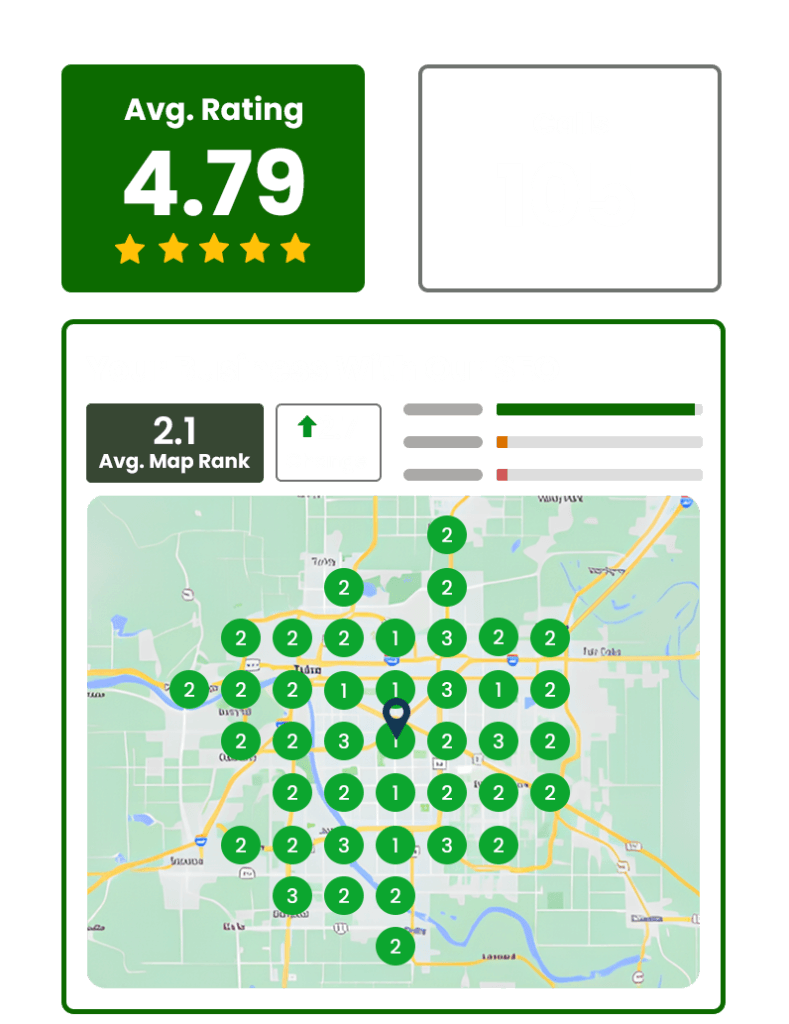
Most regenerative medicine clinics spend thousands on ads while their free Google Business Profile sits incomplete. In 2026, your GBP is no longer just a listing. It is the digital front door, the first trust signal, and often the deciding factor before a patient ever visits your website. This guide covers exactly how to optimize your Google Business Profile to rank in the local Map Pack, attract high-intent patients, and stay compliant with FDA and FTC rules.
TLDR: Your Google Business Profile (GBP) is now the single most important local marketing asset for regenerative medicine clinics. According to the Whitespark 2026 Local Search Ranking Factors report, 8 of the top 10 Map Pack ranking factors come directly from your GBP. Over 70% of local searches result in GBP interactions, not website visits. AI Overviews now pull from GBP data, and incomplete profiles get skipped. This guide walks you through every optimization step, including the compliance layer that most guides miss entirely.
Important Note
This article is for educational purposes only and does not constitute legal, medical, or regulatory advice. Marketing strategies discussed should be reviewed by qualified legal counsel before implementation, particularly regarding FDA, FTC, and state-specific advertising regulations. Regen Portal is a marketing company, not a law firm or compliance consultancy.
Here is a scenario that plays out every day. A patient searches “regenerative medicine clinic near me.” Google shows three clinics in the Map Pack. Clinic A has a complete profile with 87 reviews, recent posts, professional photos, and a clear description. Clinic B has 12 reviews, no photos, and a business description that says “We are a medical clinic.” Clinic C has not been claimed at all.
Which one gets the click? Which one gets the call?
If your Google Business Profile looks like Clinic B or Clinic C, you are losing patients to competitors who took the time to optimize. The good news: this is fixable, it is free, and it does not require any ad spend. Let me show you how.
Why GBP is now your clinic’s most important marketing asset
Patients no longer start their search on your website. They start on Google Maps and the local Map Pack. Over 70% of local searches result in a direct GBP interaction: a call, a direction request, or a website click, all from the listing itself. Many patients never visit your website at all.
According to RepuGen, 73% of patients rely on online reviews as their first step in selecting a provider. That review section lives on your GBP, not your site. Your website matters, but in 2026, the GBP is where the decision starts.
For regenerative medicine clinics, this shift matters even more. Paid advertising faces heavy restrictions on Google and Meta for regen services. But your GBP is not an ad. It is an organic listing. There are no content restrictions from ad platforms. The rules that apply are Google’s Business Profile policies, plus the standard FDA and FTC requirements that apply to all marketing content.
Think of it this way. Two clinics offer the same services in the same city. Clinic A has a prime street location but a neglected GBP with 8 reviews and no photos. Clinic B has a quieter location but a fully optimized GBP with 120 reviews, weekly posts, and a detailed service description. Clinic B gets more calls, more direction requests, and more patients. The digital front door now matters more than the physical one.
The three ranking signals Google actually uses
Google has publicly documented the three signals that determine which businesses appear in local search results: relevance, distance, and prominence.
Relevance measures how well your profile matches what someone searched for. If a patient searches “PRP clinic near me” and your primary category is “Medical Clinic” instead of something more specific, you lose relevance points. Your business description, categories, and services all feed this signal.
Distance is straightforward. Google shows results closest to the searcher. You cannot change your address, but you can make sure Google knows your exact location and service area.
Prominence is where most clinics fall short. This signal measures how well-known your business is. Google calculates prominence using reviews (quantity, quality, and response rate), mentions across the web, behavioral engagement (clicks, calls, direction requests from your listing), and your overall online authority.
Most clinics only optimize for relevance. They fill out the profile, pick a category, and stop. That is why they do not rank. Prominence is the signal that separates clinics that show up in the Map Pack from clinics that do not. And prominence is built through consistent activity: posting, collecting reviews, responding to questions, and keeping your profile active.
What this means for your practice: If you have not touched your GBP in months, Google sees an inactive business. An inactive business is not prominent. And a business that is not prominent does not rank.
What the 2026 ranking factors actually show
The Whitespark 2026 Local Search Ranking Factors report surveys 47 leading local SEO experts and scores 187 ranking factors. It is the most comprehensive analysis of what actually drives local rankings.
The findings confirm what we see with our clients every day. Primary business category selection is the single most important Map Pack ranking factor. Eight of the top ten factors come directly from your Google Business Profile.
Here is what changed in 2026:
| Factor | 2026 Trend |
|---|---|
| Primary category selection | Still #1 factor |
| Behavioral signals (clicks, calls, direction requests) | Rising fast |
| Review quantity, quality, and velocity | Still critical |
| Social signals | New factor in 2026 |
| AI search visibility signals | New factor in 2026 |
| Link-based factors | Declining for local pack |
Two new categories debuted this year. Social signals now influence local rankings for the first time. And AI search visibility, meaning how well your business information feeds into AI-generated answers, entered the ranking factors for the first time in 2026.
What this means for your practice: If you are still thinking about local SEO the way it worked in 2023, you are behind. The game has shifted toward behavioral engagement and AI readiness. Your GBP needs to be active, complete, and structured so both human searchers and AI systems can understand your practice.
The GBP optimization checklist for regen clinics
Here is exactly what to do, step by step.
Claim and verify your profile
If you have not claimed your GBP, start here. Go to Google’s Business Profile setup and verify ownership. Use a branded Google account ([email protected]), not a personal one. If a staff member set it up years ago on their personal account and left, you need to transfer ownership. Losing access to your GBP can take weeks to fix.
Choose the right primary category
This is the single most important ranking factor. Choose the category that most closely matches your core service. For regenerative medicine clinics, your options include “Medical Clinic,” “Functional Medicine Practitioner,” “Medical Spa,” or in some cases “Regenerative Medicine Clinic” if Google has made it available in your area. Check what your top-ranking competitors use and test carefully. Per Google’s guidelines for representing your business, your category should describe what your business is, not what it does.
Add secondary categories
Add 2 to 3 relevant secondary categories. Do not stuff categories. If your practice offers regenerative medicine, functional medicine, and sports medicine, those are relevant. Adding “Day Spa” or “Yoga Studio” because they sound good is not.
Lock down NAP consistency
NAP stands for Name, Address, Phone number. This information must be identical across your GBP, your website, and every online directory where your practice appears. Even small differences hurt. “Suite 200” on your website and “Ste 200” on your GBP counts as a mismatch. Audit everything.
Write a compliant business description
Your GBP description is marketing content. FDA and FTC rules apply. Write a description that includes your specialty, location, and services using education framing. Do not use treatment outcome claims. Here is a compliant example:
“[Practice Name] provides consultations and evaluations for patients interested in regenerative medicine approaches to joint health, sports recovery, and overall wellness. Located in [City, State], our team specializes in personalized care plans. Schedule a consultation to see if our services may be appropriate for you.”
Here is what not to write: “Our stem cell treatments cure arthritis and reverse aging.” That is a compliance violation on every level.
Upload high-quality photos and videos
Profiles with quality photos get 42% more direction requests and 35% more website click-throughs. Upload photos of your exterior (so patients can find you), interior, treatment rooms, and team headshots.
A critical compliance note: do not post patient photos without a signed HIPAA-compliant release. Do not post before-and-after photos on GBP. Review Google’s Business Profile policies for what is and is not allowed in photos. When in doubt, use team and facility photos.
Post regularly
Google rewards active profiles. Post 2 to 3 times per week. Good content for GBP posts includes: health awareness topics, clinic updates, staff spotlights, community involvement, and educational content about conditions (not treatments). Never post treatment outcome claims in your GBP posts. Keep everything educational.
Build your review strategy
73% of patients use reviews as their first step in choosing a provider. According to research from Evokad, patients who find a practice through reviews show 234% higher lifetime value. Ask patients for reviews after positive interactions. Ask them to be specific (mention the staff, the experience, the consultation process). Respond to every review, positive and negative. Your response signals to Google that you are an active, engaged business.
Manage Q&A proactively
63% of people check the Q&A section before contacting a business. Seed your own FAQ with common questions and compliant answers. Monitor it regularly because anyone can post questions and answers, including Google Local Guides who may provide wrong information.
Important: Google is now rolling out AI-generated answers in the Q&A section. The AI pulls from your profile data, reviews, and website. If your profile is incomplete, the AI may generate inaccurate answers about your practice. The best defense is a complete, accurate, keyword-rich profile.
Add booking links
Zero-click conversions are the goal in 2026. If a competitor lets patients book in fewer steps, you lose the lead. Add a booking link directly to your GBP. If you use an online scheduling tool, connect it. If you do not have one, your website’s contact page should be the link.
The compliance layer: what regen clinics must get right on GBP
This is the section that separates this guide from every other GBP optimization article on the internet. If you run a regenerative medicine clinic, your GBP is not just a marketing tool. It is a public-facing compliance surface.
Your GBP business description, posts, Q&A answers, and photo captions are all marketing content. They are subject to the same FDA and FTC rules as your website, your ads, and your social media.
In September 2025, the FDA issued a warning letter to New Life Medical Services that cited both their clinic website and their Instagram content. GBP content is equally public and equally subject to enforcement.
In January 2025, the FTC permanently banned the co-founders of the Stem Cell Institute of America for making deceptive marketing claims about stem cell treatments. The enforcement action covered their marketing broadly. Your GBP posts are marketing.
Here is the compliance checklist for your GBP:
Never use “treats,” “heals,” “cures,” or “reverses” any disease or condition in your GBP description, posts, or Q&A answers. Use education and consultation framing: “Schedule a consultation to see if this option may be appropriate for you.”
Do not post before-and-after photos. Even if you have patient consent for other channels, GBP is a public platform with its own policies.
Do not post testimonials that include treatment outcome claims. A review a patient writes organically is different from content you post. Keep your posted content educational.
Include a medical disclaimer and consultation CTA in your business description.
Always consult qualified legal counsel before finalizing marketing language for your clinic. Platform policies and regulatory guidance change, and what is compliant today may need updating.
What this means for your practice: Most GBP optimization guides do not mention compliance. That is because they are written for restaurants and retail stores. Regenerative medicine clinics operate under a different set of rules. The clinics that understand this protect their business. The ones that do not end up in warning letters.
AI search in 2026: why your GBP now feeds AI Overviews and Maps AI
Google’s AI Overviews and AI-driven Maps now use your GBP as their primary source of truth for local recommendations. When a patient asks Google “best regenerative medicine clinic near me,” the AI does not just read your website. It reads your GBP: your categories, your services, your reviews, your posts, your Q&A.
For the first time in 2026, AI search visibility is a scored local ranking signal in the Whitespark report. This means how well your business information feeds AI systems is now measured alongside traditional factors like reviews and categories.
An incomplete or inconsistent profile gets skipped by AI entirely. If your GBP says one thing, your website says another, and your directory listings say a third, the AI cannot trust any of it. It moves on to a competitor whose information is consistent.
Building an “AI-ready” GBP means: complete and accurate categories, keyword-rich service descriptions, detailed Q&A (seeded by you), high-quality photos with descriptive file names, and consistent NAP across every platform. We covered how AI Overviews are changing SEO for regenerative medicine practices in depth. The GBP is where that shift starts for local search.
Common GBP mistakes regen clinics make
These are the patterns I see after 15 years working with regenerative medicine practices. Every one of them is fixable.
Keyword stuffing in the business name. Your GBP business name must match your real-world business name. Adding “Best Stem Cell Therapy” or “Top PRP Clinic” to your business name violates Google’s guidelines and can get your profile suspended.
Using a personal Google account. If the person who set up your GBP leaves, you lose access. Always use a branded account controlled by the practice.
Ignoring the Q&A section. Anyone can post answers to questions on your GBP. Google Local Guides sometimes provide wrong information. And now Google’s AI generates answers from your profile data. If you are not managing this, someone else is managing it for you, poorly.
Never posting. An inactive GBP signals to Google that your business may not be active. Post 2 to 3 times per week. It takes 10 minutes.
No review response strategy. Not responding to reviews tells Google (and patients) that you do not care about feedback. Respond to every review within 24 to 48 hours. Keep responses professional. Never confirm or deny patient status in your response (HIPAA).
Using a PO Box address. Google requires a physical address where patients can visit. PO Boxes violate the policy and can trigger a suspension.
Wrong primary category. If your primary category is “General Practitioner” but you run a regenerative medicine clinic, you are telling Google to show you for the wrong searches. This is the number one ranking factor. Get it right.
HIPAA violations. Posting patient photos or video testimonials without a signed release is a HIPAA violation. It does not matter how great the content looks. No release, no post.
Frequently asked questions
What is a Google Business Profile and why does it matter for medical clinics?
A Google Business Profile is a free listing that controls how your practice appears in Google Search and Google Maps. For medical clinics, it is the first thing patients see when searching for care in your area. Over 70% of local searches result in a direct GBP interaction.
How do I choose the right primary category for a regenerative medicine clinic?
Choose the category that most closely describes what your business is. Options for regen clinics include “Medical Clinic,” “Functional Medicine Practitioner,” “Medical Spa,” or “Regenerative Medicine Clinic” if available. Check what top-ranking competitors in your area use and review Google’s category guidelines.
How often should I post on my Google Business Profile?
Post 2 to 3 times per week. Keep posts educational: health awareness topics, clinic updates, staff spotlights, and community involvement. Never post treatment outcome claims or before-and-after photos.
Can I post before-and-after photos on my GBP?
No. Even with patient consent, avoid before-and-after photos on GBP. Google’s policies restrict certain medical imagery, and the FDA and FTC treat GBP content as marketing. Use team photos, facility images, and educational graphics instead.
How do reviews affect my local search ranking?
Reviews directly affect your prominence signal, one of Google’s three ranking factors. 73% of patients use reviews as their first step in choosing a provider. Quantity, quality, recency, and your response rate all matter.
What is NAP consistency and why does it matter?
NAP stands for Name, Address, Phone number. This information must be identical across your GBP, website, and all directories. Even small differences (Suite 200 vs. Ste 200) confuse Google’s algorithms and hurt your rankings.
Is Google replacing Q&A with AI answers?
Google is rolling out AI-generated answers in the Q&A section. The AI pulls from your profile data, reviews, and website. The best way to ensure accurate AI answers is to maintain a complete, accurate GBP with a well-seeded FAQ section.
What GBP language is compliant for regenerative medicine clinics?
Use education and consultation framing. “Schedule a consultation to see if this option may be appropriate for you” is compliant. “Our treatments cure arthritis” is not. Your GBP content is subject to the same FDA and FTC advertising rules as your website and ads.
For more on local SEO strategy for regenerative medicine clinics, subscribe to Oscar’s YouTube channel for weekly insights from industry leaders: https://www.youtube.com/@oatellez
Key takeaways
- Your GBP is your digital front door. Over 70% of local searches result in a direct GBP interaction. An unoptimized profile is an open invitation for competitors.
- Primary category is the #1 ranking factor. Choose it carefully. It has more impact on your Map Pack ranking than any other single optimization.
- Prominence is where most clinics fail. Reviews, posts, engagement, and activity signals separate clinics that rank from clinics that do not.
- AI now reads your GBP. AI Overviews and Maps AI use your profile as their primary local data source. Incomplete profiles get skipped.
- Compliance applies to your GBP. Your business description, posts, and Q&A answers are marketing content subject to FDA and FTC rules. The FDA cited clinic Instagram content in a 2025 enforcement action. GBP content carries the same risk.
- Fix the common mistakes. Keyword stuffing, wrong category, no reviews, no posts, and HIPAA violations are all fixable today.
Your GBP is working for you or against you right now
Every day your Google Business Profile sits incomplete, you are handing patients to the clinic down the street that took 30 minutes to optimize theirs. This is not a “someday” project. It is the highest-return marketing action you can take this week.
If you want help building a local SEO strategy designed for regenerative medicine, Regen Portal’s SEO services are built specifically for this industry. We know the compliance rules because we come from this industry.
Email: [email protected] Website: regenportal.com YouTube: Subscribe for weekly insights
About Regen Portal
Regen Portal is a marketing company serving the regenerative medicine industry. We provide SEO, content creation, social media management, paid advertising, website development, and branding services for clinics, manufacturers, distributors, and independent providers. Some strategies discussed in our educational content align with services we offer. For more information, visit regenportal.com or contact us.
Oscar Tellez is the founder of Regen Portal, a marketing company built for the regenerative medicine industry. With over 15 years of experience spanning clinical operations, product distribution, and digital marketing, Oscar has helped hundreds of practices, manufacturers, and distributors grow through compliant, high-performance marketing strategies. He holds a B.S. in Exercise Physiology and Health Promotion from Florida Atlantic University.