
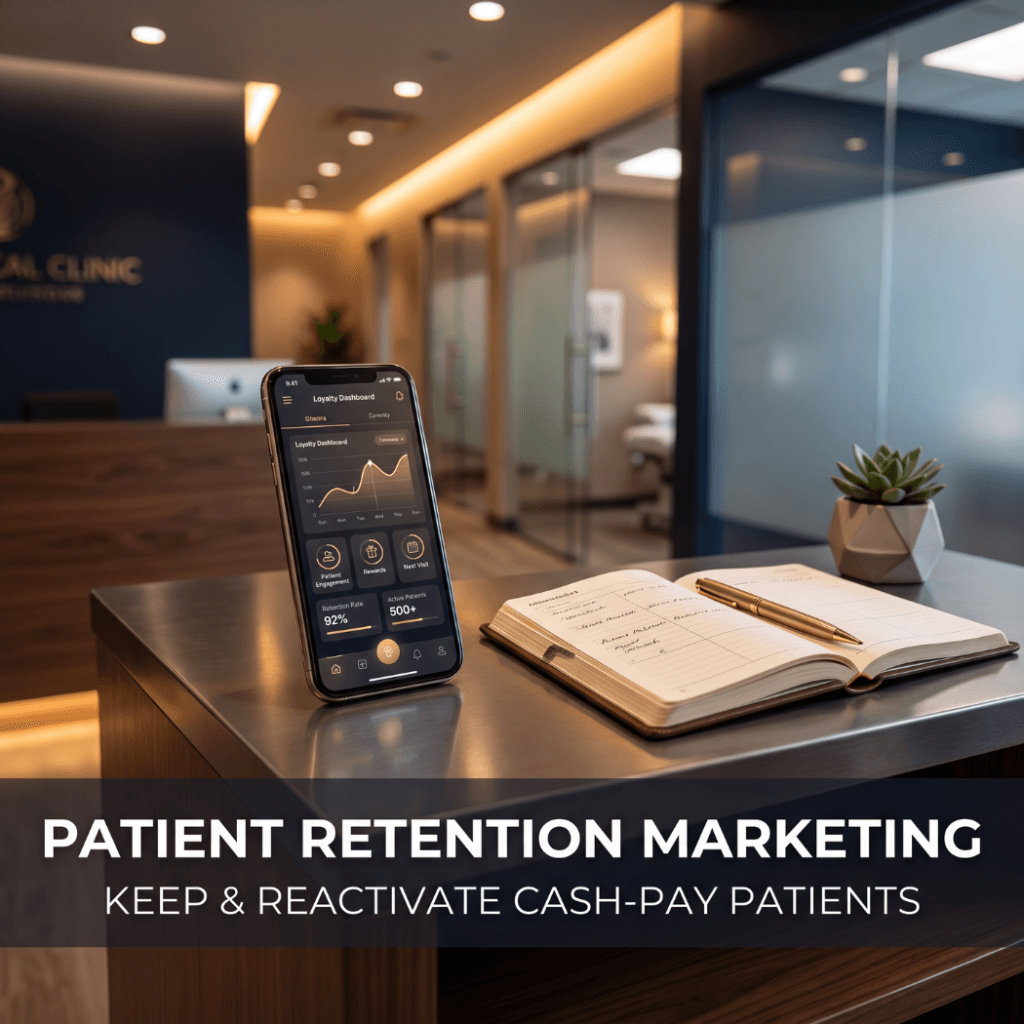
Most regen clinics pour their marketing money into finding new patients and almost nothing into keeping the ones they have. That is backwards. A past cash-pay patient already trusts you and has already paid you. Winning them back costs far less than finding a stranger. This guide covers the retention problem unique to cash-pay regen, the four touchpoints that matter, and the compliant way to run them.
TLDR: Cash-pay regen clinics have a retention problem that insurance practices do not: no insurance recall, high cost that pushes follow-up out, and no automatic reason to return. Four touchpoints fix it: post-treatment follow-up, education nurture, milestone check-in, and reactivation. Patient messages carry HIPAA and CAN-SPAM rules you have to respect. This guide covers all of it. None of this is legal advice.
Important Note
This article is for educational purposes only and does not constitute legal, medical, or regulatory advice. Marketing strategies discussed should be reviewed by qualified legal counsel before implementation, especially regarding HIPAA, FTC, CAN-SPAM, and state-specific regulations. Regen Portal is a marketing and consulting company, not a law firm.
Here is the math most clinics never run. You spend heavily to acquire a patient. They come in, pay, have a good experience, and leave. Then you spend heavily again to acquire the next stranger, while the patient who already trusts you drifts away and never comes back. The most valuable patient you have is the one you already earned, and most clinics ignore them.
This is the retention paradox. Marketing spend skews almost entirely toward acquisition, yet retention is where patient lifetime value is built. A past patient knows you, trusts you, and has already cleared the hardest hurdle, the first purchase. Re-engaging them costs far less and comes easier than starting cold, but only if you have a system for it.
This guide covers that system. We will look at why cash-pay regen clinics have a retention problem insurance practices do not, the four lifecycle touchpoints that keep patients engaged, the HIPAA and CAN-SPAM rules that govern patient messages, and how it all adds up in lifetime value. Email is the backbone of most of this, which our post on email marketing for regen clinics covers in depth.
Why Cash-Pay Regen Clinics Have A Unique Retention Problem
Cash-pay regen clinics lose patients in ways insurance practices do not, because none of the usual return mechanisms apply. There is no insurance-driven recall, no annual covered visit, and the high cost gives patients a reason to delay or skip follow-up. Without a system, patients simply fade away.
An insurance practice has built-in return triggers. Covered annual visits, insurance reminders, a low marginal cost to the patient. A cash-pay regen patient has none of that. Every return visit is another out-of-pocket decision, so the default is to put it off. And because the clinic has no insurance-driven recall list nudging them back, the patient quietly drops off the radar. Our post on understanding the cash-pay decision for patients explains the mindset behind that hesitation.
This is why retention has to be intentional in regen. The structural pulls that bring insurance patients back do not exist. If you do not build a deliberate retention system, the cost itself pushes patients away.
What this means for your practice: Do not assume patients will return on their own. In cash-pay regen, nothing automatic brings them back, so retention has to be a built system, not a hope.
The Four Retention Touchpoints That Matter Most
Retention in regen runs on four touchpoints across the patient lifecycle. Each serves a distinct purpose, and together they keep a patient engaged instead of drifting. Build all four and you have a complete retention system.
Here they are.
| Touchpoint | Purpose |
|---|---|
| Post-treatment follow-up | Show care, reinforce trust, set the next step |
| Education nurture | Stay present with value between visits |
| Milestone check-in | Re-engage at natural intervals |
| Reactivation sequence | Win back patients who have gone quiet |
Post-Treatment Follow-Up
The window right after treatment is when trust is highest. A genuine follow-up that checks in and reinforces care strengthens the relationship and naturally sets up any next step. Skip it and the patient feels like a transaction.
Education Nurture
Between visits, stay present with useful content, not constant sales. Honest education keeps you top of mind and reinforces your authority, so when the patient is ready for a next step, you are the obvious choice. This is the same teaching content that powers the rest of your marketing, repurposed for your existing patients.
Milestone Check-In
Natural intervals give you a non-salesy reason to reach out. A check-in at a sensible point re-engages the patient without pressure, and it signals you are paying attention to them as a person, not a one-time sale.
Reactivation Sequence
For patients who have gone quiet, a reactivation sequence brings them back. A small series of genuine, valuable touches reminds them you exist and invites them to re-engage. These patients already trust you, so reactivation costs far less than new acquisition. Our post on patient acquisition funnels that work covers the new-patient side; reactivation is the high-value mirror of it.
What this means for your practice: These four touchpoints turn a one-time visit into a relationship. Most clinics do the first one inconsistently and none of the others, which is exactly where the retention value leaks out.
The HIPAA And CAN-SPAM Layer For Retention Communications
Patient retention messages are regulated, and the rules are easy to get wrong. HIPAA governs how you use patient information for outreach, and CAN-SPAM governs your email practices. Both apply to the messages you send past patients.
HIPAA draws a line between treatment messages and marketing messages, and that line affects what you can send and when authorization is needed. Using patient information to market more services is different from a routine care follow-up, and the distinction matters. Your compliance counsel can map your specific sequences against current HHS guidance on patient messages. The safe posture is to handle patient data carefully and grasp which messages count as marketing.
CAN-SPAM is more concrete. Commercial emails need accurate sender information and subject lines, a physical address, and a clear, honored opt-out. The FTC’s CAN-SPAM compliance guide lays out the requirements. Even a friendly newsletter to past patients counts as commercial if it nudges services. And no retention message should ever carry a clinical outcome claim.
What this means for your practice: Retention messaging is regulated messaging. Understand the HIPAA line between care and marketing messages, follow CAN-SPAM on every commercial email, and keep outcome claims out entirely. Build the sequences with counsel, not on instinct.
What The Retention Sequences Look Like, Compliantly
A compliant retention sequence is built from genuine, valuable touches that respect the rules. It uses honest framing, follows CAN-SPAM, handles patient data carefully, and never promises a clinical result. The structure is simple once the compliance posture is set.
A post-treatment follow-up checks in genuinely and offers helpful information. An education nurture sequence shares useful, claim-free content on a steady cadence. A milestone check-in reaches out at a natural interval with value, not pressure. A reactivation sequence offers a few honest touches to a quiet patient, inviting them to reconnect. Every message has a clear opt-out, accurate sender details, and no outcome language.
The tone throughout is care, not pursuit. These are people who trusted you with an expensive, personal decision. The messaging should feel like a clinic that remembers them, not a sales machine. That tone is both better for retention and safer for compliance.
What this means for your practice: Build sequences that lead with genuine value and respect the rules in every message. The caring, claim-free version retains better and keeps you compliant at the same time.
The Lifetime Value Math
Retention matters because of what it does to patient lifetime value. A patient who returns or reactivates is worth far more than a one-time visit, and improving retention compounds that value across your whole patient base. The concept is simple even without specific numbers.
Think of it conceptually. Acquisition gets you the first visit. Retention determines whether that patient is worth one visit or several over time. A modest improvement in how many patients return, applied across every patient you acquire, raises the total value of your entire base, without spending more on acquisition. The patients are already yours. Retention decides how much they are ultimately worth.
This is why the acquisition-heavy spend is backwards. The same dollar often does more on retention, because it works on patients who already trust you rather than strangers who do not. Referral marketing compounds this further, which our post on referral marketing for regen clinics covers.
What this means for your practice: Retention is leverage on money you have already spent. Improving how many patients come back lifts the value of your whole base at a fraction of acquisition cost. That is why the spend should shift toward it.
How This Looks In Practice
Consider a regen clinic with steady new-patient flow but almost no repeat business.
The Challenge: The clinic spent heavily on acquisition, treated patients well, and then never contacted them again. Past patients drifted off, and the clinic kept buying new ones to stay level.
The Approach: The clinic built the four touchpoints. A genuine post-treatment follow-up, a steady education nurture, milestone check-ins, and a reactivation sequence for quiet patients. Every message was built with counsel for HIPAA, followed CAN-SPAM, and carried no outcome claims.
The Compliance Check: Patient data handled per HIPAA, with the care-versus-marketing line respected. Every commercial email CAN-SPAM compliant with a clear opt-out. No clinical outcome claims anywhere in the sequences.
The Result: Past patients began returning and reactivating, lifting the value of the base the clinic had already paid to acquire. The clinic reduced its dependence on a constant stream of new strangers, because it finally kept the patients it earned.
Frequently Asked Questions
How do I keep cash-pay patients coming back to my regen clinic? Build a deliberate retention system around four touchpoints: a genuine post-treatment follow-up, ongoing education nurture, milestone check-ins, and a reactivation sequence for quiet patients. Cash-pay regen has no automatic return triggers, so retention has to be intentional and consistent.
What is a patient reactivation strategy for a regen practice? A short series of genuine, valuable touches to patients who have gone quiet, reminding them you exist and inviting them to reconnect. Because these patients already trust you, reactivation costs far less than new acquisition, as long as it follows HIPAA and CAN-SPAM.
How do I build patient retention marketing for a cash-pay medical practice? Set the four lifecycle touchpoints, build each as a compliant sequence with honest framing and clear opt-outs, respect the HIPAA line between care and marketing messages, and keep all outcome claims out. Lead with genuine value in every message.
What email sequences keep regen patients engaged between treatments? An education nurture sequence that shares useful, claim-free content on a steady cadence, plus milestone check-ins at natural intervals. The goal is to stay present with value, not constant selling, so you remain the obvious choice when the patient is ready for a next step.
How is patient retention different for cash-pay vs. insurance practices? Insurance practices have built-in return triggers like covered annual visits and insurance recall. Cash-pay regen has none of those, and the high out-of-pocket cost pushes follow-up out. So retention must be a built system rather than something that happens automatically.
What HIPAA and CAN-SPAM rules apply to patient retention email and SMS? HIPAA distinguishes care messages from marketing messages, which affects what you can send and when authorization is needed. CAN-SPAM requires accurate sender details, a physical address, and a clear, honored opt-out on commercial email. Build sequences with counsel and keep outcome claims out.
Key Takeaways
- Retention is the backwards spend. Most money goes to acquisition, but retention builds lifetime value.
- Cash-pay regen has no automatic recall. No insurance triggers and high cost mean patients fade unless you build a system.
- Four touchpoints carry it. Post-treatment follow-up, education nurture, milestone check-in, and reactivation.
- Reactivation is high-value. Quiet patients already trust you, so winning them back beats cold acquisition.
- Retention messaging is regulated. Respect the HIPAA care-versus-marketing line and follow CAN-SPAM on every email.
- No outcome claims, ever. Retention messages carry the same claim rules as the rest of your marketing.
- Lead with care. The caring, claim-free tone retains better and stays compliant.
PS: Keep The Patients You Already Earned
PS: If you are buying new patients while past ones drift away, a retention system is the lowest-cost growth you are not using. Building compliant retention sequences is what we do for regen practices. Reach out at hello@regenportal.com, or watch how we think about regen growth on YouTube and subscribe for weekly insights.
About Regen Portal
Regen Portal is a marketing company serving the regenerative medicine industry. We provide SEO, content creation, social media management, paid advertising, website development, branding, marketing compliance, practice consulting, and AI and ops consulting for clinics, manufacturers, distributors, and independent providers. Some strategies discussed in our educational content align with services we offer. For more on how we work, contact us.
Oscar Tellez is the founder of Regen Portal, a marketing and consulting company built for the regenerative medicine industry. He has been in this industry since 2015. He started in medical sales and has worked with PRP since 2016. He has reached hundreds of practices and over 200 doctors through sales, teaching and marketing. He holds a B.S. in Exercise Science and Health Promotion from Florida Atlantic University.