
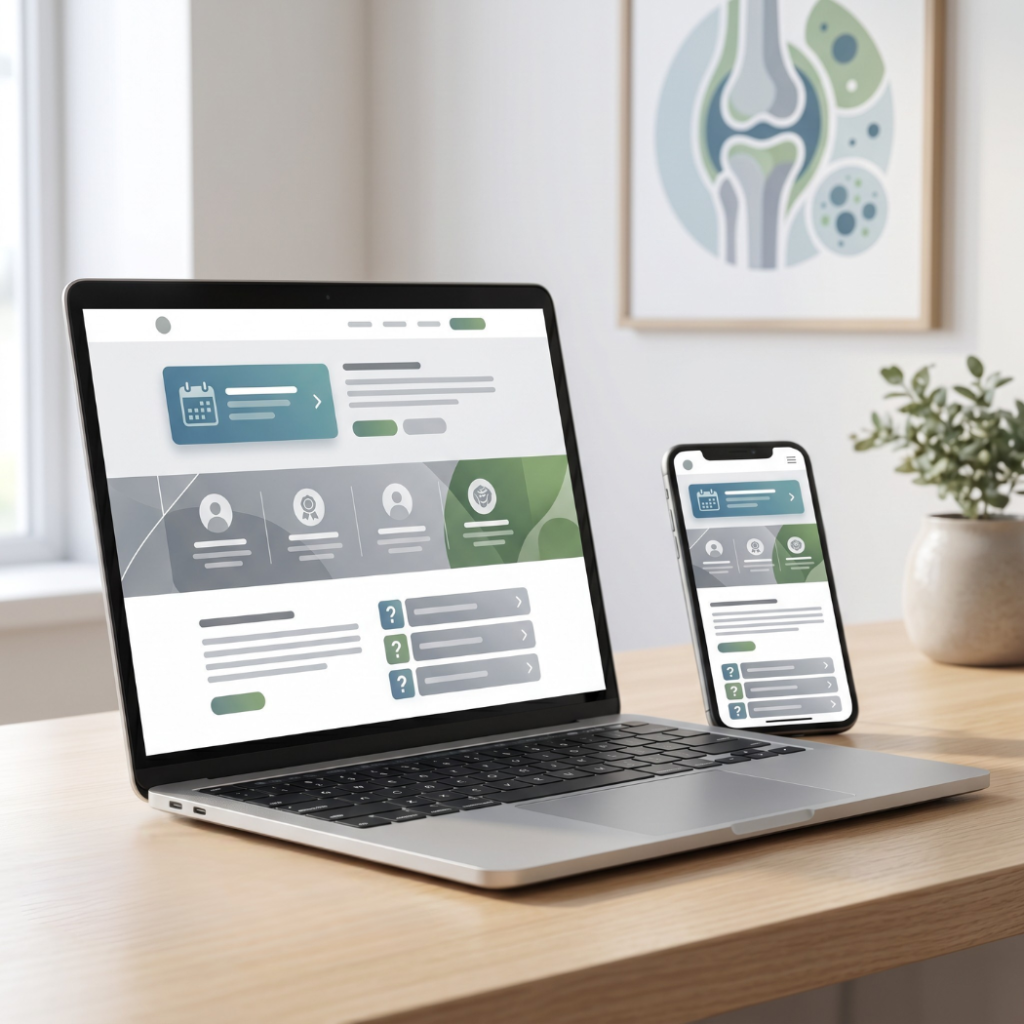
Most PRP clinic owners think they have a traffic problem. They almost never do. They have a funnel problem. The bottleneck between the first Google search and the booked consultation is where cash-pay patients quietly disappear, often without the clinic owner realizing how many were close to booking and never did. This article maps every stage of the PRP consultation funnel, identifies the friction points where cash-pay patients drop out, and gives the exact fixes for each one.
TLDR: The cash-pay PRP patient moves through four funnel stages: Awareness (found you), Consideration (evaluating you), Conversion (ready to act), and Nurture (was not ready yet). Most PRP clinic websites do the Awareness stage well and fail at Consideration, then push a high-commitment booking CTA before the patient has decided to trust you. The fixes: a service page that answers the three questions in the Consideration stage, a separate stripped-down consultation page for Conversion, and a follow-up sequence for the patients who needed more time. The bottleneck is almost never traffic. It is the funnel.
Important Note
This article is for educational purposes only and does not constitute legal, medical, or regulatory advice. Marketing strategies discussed should be reviewed by qualified legal counsel before implementation, particularly regarding FDA, FTC, and state-specific advertising regulations. Regen Portal is a marketing and consulting company, not a law firm.
I have audited enough PRP clinic websites to know the funnel breaks in the same place every time. Between Consideration and Conversion. The patient did the research. The clinic just did not give them the right next step at the right moment. That is what this article fixes.
Why Cash-Pay PRP Patients Are Different (And Why Standard Funnels Fail Them)
The cash-pay PRP patient is making a significant financial decision. Typically $800 to $2,500 per session, out of pocket, for an off-label procedure they may be hearing about for the first time. That decision cycle is longer than a standard healthcare booking. The patient researches, compares, reads reviews, looks up credentials, watches videos, and often visits the same clinic website multiple times before booking.
A funnel designed for a standard insurance-billed appointment (one visit, one CTA, book now) fails this patient every time. The cash-pay patient is not slow. They are doing diligent work, and they should be. The clinics that win are the ones that meet that work with answers, not pressure.
The three-part qualification the patient is working through internally:
- Is PRP appropriate for my situation? (condition fit)
- Do I trust this clinic and this provider? (credibility)
- Is this worth the cost? (financial readiness)
The funnel must answer all three questions in sequence. Pushing the booking CTA before questions 1 and 2 are answered is the single most common conversion error in regen clinic marketing.
The Four Funnel Stages (And What Each One Requires)
The four stages map cleanly to what the patient is doing and what the page must provide at each step.
Stage 1: Awareness (They Found You)
The patient searched “PRP therapy [city]” or a related query and your page appeared. This is where SEO does its job. The patient’s question at this stage is simple: “Is this relevant to what I am looking for?”
The page element that answers it: the H1. Treatment plus city plus intent phrase. If the H1 does not confirm relevance in the first three seconds, the patient bounces back to the search results. The Awareness stage is not about conversion. It is about confirmation. We covered the full keyword research approach that drives qualified Awareness-stage traffic in a separate guide.
Stage 2: Consideration (They Are Evaluating You)
The patient is still on your site. They are reading. They are comparing you to other clinics they have already visited. Their questions: What is PRP exactly? Is this provider credible? What does the process look like? Will my situation qualify?
The page elements that answer these questions: the What/How/Who educational section, the named credentialed provider with visible credentials, the FAQ section with compliant answers, peer-reviewed citations, and a transparent process description. This stage is where most PRP clinic websites lose the patient. The page describes the treatment. It does not answer the questions that determine trust. We covered the full diagnosis of why regen clinic websites get traffic but no bookings in a previous guide.
The trust signals that move cash-pay patients through Consideration are specific. Generic “we have years of experience” content does nothing. Named providers with verifiable credentials, transparent process descriptions, and compliant patient experience content do everything. The seven trust signals that actually convert guide covers the full list.
Stage 3: Conversion (They Are Ready to Act)
The patient now has enough information to take a step. Their question: “What is the easiest way to find out if this is right for me?”
The answer is always a low-friction consultation CTA, not a high-commitment booking. “Schedule a Consultation” is lower friction than “Book Your PRP Treatment.” The consultation is the product. The conversion goal is the consultation, not the procedure itself. CTAs should appear twice on the service page: once above the fold and once after the FAQ. The form must be frictionless: 3 to 5 fields maximum, mobile-first design, and a clear response time expectation (“we respond within one business day”).
This is the entire conversion mechanism. Everything before it builds the trust that makes this click possible. Everything after it is execution.
Stage 4: Nurture (They Were Not Ready Yet)
Most PRP patients who visit a clinic website for the first time do not book on that visit. They return later. The clinics that win capture something from that first visit (an email, a phone number through a call tracking interaction, a video view) and use it to stay present through the rest of the decision cycle.
The components: an email follow-up sequence of 3 to 5 emails over 2 to 3 weeks answering the most common pre-consultation questions, Meta video view retargeting with educational follow-ups (not conversion ads), and Google Display retargeting to keep the clinic visible in the patient’s research path. The Nurture stage is not about pressure. It is about answering the next question the patient is asking.
The Five Friction Points Where PRP Clinics Lose Patients
Five specific failures show up in nearly every PRP clinic audit. Each has a one-sentence fix.
- No geographic signal in the H1. The patient lands on a page titled “PRP Therapy” and cannot tell if the clinic is in their city. Fix: use the H1 formula with the city name.
- No answered questions. The patient has to leave the site to find the information that should be on the page. Fix: an FAQ section with at least 6 questions and compliant answers per the Traffic Light Framework.
- Missing or anonymous provider. The patient cannot find out who is performing the procedure. Fix: named provider with degree, specialty, board certification, state license, bio, and photo.
- CTA asks for too much too soon. The patient is still in Consideration and the page is asking them to “book treatment.” Fix: “Schedule a Consultation” framing throughout, never treatment framing.
- No follow-up capture. The patient leaves and the clinic has no way to stay in touch. Fix: email capture through blog content, Messenger opt-in, or a follow-up form offer.
What this means for your practice: Every patient you lose at one of these five points is a patient you should have won. Each fix is hours of work, not weeks. The compounding effect across a year is what separates clinics that grow from clinics that plateau.
The Consultation Page vs. The Service Page (Two Different Jobs)
Most clinics do not make this distinction. A service page does the SEO job and the Consideration-stage education job. A consultation page does the Conversion-stage job. They are not the same page.
A service page is built for the patient who is still evaluating. It is long, educational, and full of trust signals. It answers questions. It earns the click on the CTA.
A consultation page is stripped down. One goal, one CTA, minimal distractions. A short process description (what happens at the consultation in 3 to 5 bullet points). The provider’s name, photo, and credentials. A frictionless form. Nothing else. When the patient has decided they want to explore PRP and clicks the CTA on the service page, they should land on the consultation page, not the homepage, not a generic contact form, and not the same service page with an anchor scroll.
The consultation page is a separate conversion asset. It exists for one reason: to make booking as easy as humanly possible for the patient who has already done the research.
The Follow-Up Sequence That Converts Slow Deciders
Cash-pay PRP patients often need multiple touches before booking. The clinic that captures an email or phone number on the first visit owns the next 30 days of the patient’s decision cycle. The clinic that does not capture anything is gone the moment the patient closes the browser tab.
A practical 3-email follow-up sequence:
Email 1 (Day 1, sent automatically after form submission or email capture). “What Happens at a PRP Consultation.” Sets expectations for the first step. Removes anxiety. Confirms what the patient will and will not be asked to commit to.
Email 2 (Day 4). “The Most Common Questions About PRP We Hear Before a Consultation.” Answers objections. References the FAQ from the service page. Includes a soft re-invitation to schedule.
Email 3 (Day 10). Educational content link (a blog post, a video). No urgency. No pressure. Another answer to another question the patient is likely still working through.
The compliance requirements for email content match the Traffic Light Framework rules for any other clinic marketing asset. No outcome claims. No FDA-approved language for off-label applications. No “guaranteed results.” Consult qualified legal counsel before launching email sequences that discuss specific clinical applications.
How to Measure the Funnel Without Meta’s Broken Pixel
Since Meta’s Pixel is restricted for health and wellness advertisers and many regen clinics now have incomplete paid tracking, the measurement stack must shift to first-party tools. We covered the full Meta restrictions context in a previous guide.
Google Analytics 4. Track organic sessions to the service page and consultation page separately. Measure scroll depth on the service page (are patients getting to the FAQ and the CTA, or bouncing before?). Measure form initiation versus form submission (how many start the form and quit halfway, which is a form length problem).
Call tracking numbers. Use a dynamic number insertion service to attribute phone inquiries to specific landing pages and campaigns. Phone calls remain a significant share of cash-pay patient inquiries and Meta’s tracking does not capture them at all.
CRM lead logging. Every consultation request, every phone call, every Messenger conversation gets logged with a source. The CRM, not the ad platform dashboard, is the source of truth for total inquiry volume.
Google Search Console. Which queries are bringing traffic, which pages have high impressions but low click-through (suggests a meta description or title problem), which pages rank but get no clicks (suggests an Awareness-stage mismatch).
Together, this stack gives a complete picture of the funnel without relying on platform tracking that may or may not be reporting accurately. We covered GBP optimization separately, which adds another measurable Awareness-stage channel. The FTC’s online advertising and marketing guidance sets the federal standard for honest disclosure in any tracking or follow-up communication you build into this stack.
A Real-World Scenario
Consider a PRP clinic with steady organic traffic but almost no consultation form submissions. The clinic owner assumed the traffic was unqualified. The funnel audit told a different story.
The challenge. The Consideration stage on the service page was nearly empty. No FAQ section. No provider name on the page. No process description. The CTA was “Book Now” linking to a generic contact page that asked for name, phone, email, insurance information, reason for visit, and three other fields. The form took roughly 4 minutes to complete on mobile. Patients arrived. Read briefly. Left.
The approach. The clinic rebuilt the funnel in three coordinated steps. The service page was expanded with a full What/How/Who section, a 6-question FAQ, a named provider bio with credentials and photo, and a “Schedule a Consultation” CTA placed above the fold and after the FAQ. A separate consultation page was built at /prp-consultation/ with a 3-field form (name, phone, “what would you like to discuss”). A 3-email follow-up sequence was set up for everyone who submitted the form.
The compliance check. Every section was reviewed against the Traffic Light Framework. No outcome claims. The FAQ on FDA approval status reflected PRP’s regulatory reality accurately. No before-and-after imagery on the service page or in the email sequence. The provider’s credentials were verifiable.
The general direction. Over the following months, organic traffic stayed roughly the same. Consultation form submissions increased meaningfully. The clinic’s overall marketing risk profile improved because the conversion mechanism no longer depended on a single high-commitment CTA. The issue was never the traffic. It was the funnel.
Frequently Asked Questions
Why Are PRP Website Visitors Not Booking Consultations?
Almost always a Consideration-stage failure. The page does not answer the three questions cash-pay patients work through (condition fit, credibility, financial readiness) before they will take an action. Adding FAQ content, a named credentialed provider, and a transparent process description usually fixes the gap.
What Are the Stages of the PRP Patient Decision Funnel?
Four stages: Awareness (found you via search), Consideration (evaluating you against alternatives), Conversion (ready to act on a consultation CTA), and Nurture (was not ready on the first visit and needs follow-up to return).
Where Are PRP Patients Dropping Out of the Funnel?
The most common drop-off is between Consideration and Conversion. The patient reads, decides they need more information, leaves to find it, and never returns. Capturing an email or phone number during the first visit is what makes the Nurture stage possible at all.
What Friction Points Prevent Cash-Pay Patients From Booking?
Five common ones: no geographic signal in the H1, no answered questions, missing or anonymous provider, treatment-framed CTAs instead of consultation-framed CTAs, and no follow-up capture mechanism.
How Long Does It Take a Cash-Pay PRP Patient to Decide?
Longer than insurance-billed patients. Research on elective cash-pay procedures, including comparable services like LASIK, consistently shows that patients visit provider websites multiple times across days or weeks before booking a first consultation. The funnel must be built for that decision cycle, not for the single-visit insurance-billed model.
What Follow-Up Sequence Converts PRP Leads Who Did Not Book Immediately?
A 3-email sequence over 10 days addressing the most common pre-consultation questions: what happens at the consultation, the most common questions patients ask, and an educational content link with a soft re-invitation to schedule.
What Does a High-Converting PRP Consultation Page Look Like?
Stripped down. One CTA. One goal. Process description in 3 to 5 bullets. Provider name, photo, and credentials. A frictionless form (3 to 5 fields maximum, mobile-first). No distractions. No competing CTAs. The consultation page is a separate asset from the service page.
How Do I Measure My PRP Funnel Without Meta’s Pixel?
Google Analytics 4 for page-level engagement and form behavior. Call tracking numbers for phone attribution. CRM for centralized lead logging across all sources. Google Search Console for query-level Awareness-stage data. Together this stack works without depending on restricted ad platform tracking.
For more on building a complete PRP marketing funnel, subscribe to Oscar’s YouTube channel for weekly insights from industry leaders: https://www.youtube.com/@oatellez
Key Takeaways
- The bottleneck is almost never traffic. It is the funnel between the first click and the booked consultation. Most PRP clinic owners trying to fix a traffic problem actually have a Consideration-stage gap.
- Cash-pay patients move through three internal qualifications. Condition fit, credibility, and financial readiness. The funnel must answer all three in sequence before the booking CTA earns the click.
- Service pages and consultation pages do different jobs. The service page handles SEO and Consideration. The consultation page handles Conversion. Trying to make one page do both is a common conversion error.
- The five friction points are predictable. No geographic signal, no answered questions, anonymous provider, premature CTA, no follow-up capture. Each has a specific fix.
- The Nurture stage is where most clinics give up patient relationships they could have kept. First-visit email capture plus a 3-email follow-up sequence owns the next 30 days of the patient’s decision.
- Measurement must shift to first-party tools. Google Analytics 4, call tracking, CRM, and Search Console replace what Meta’s restricted Pixel no longer reports accurately.
Your PRP Funnel Deserves a Conversion-First Rebuild
Traffic without a working funnel is wasted budget and lost patients. Most clinic owners trying to grow with more ads or more SEO would get better results by fixing the conversion mechanism their existing traffic already lands on. Regen Portal’s SEO services are built for the full funnel, not just the Awareness stage. The page that ranks does not earn anything if the page that converts is not built to do its job.
If you want a PRP funnel audit and a prioritized fix list, let’s talk.
Most of the loss in a funnel like this happens after the lead arrives rather than before. Our AI and ops consulting work is aimed squarely at that gap.
Email: hello@regenportal.com YouTube: Subscribe for weekly insights
About Regen Portal
Regen Portal is a marketing company serving the regenerative medicine industry. We provide SEO, content creation, social media management, paid advertising, website development, branding, marketing compliance, practice consulting, and AI and ops consulting for clinics, manufacturers, distributors, and independent providers. Some strategies discussed in our educational content align with services we offer. For more information, contact us.
Oscar Tellez is the founder of Regen Portal, a marketing and consulting company built for the regenerative medicine industry. He has been in this industry since 2015. He started in medical sales and has worked with PRP since 2016. He has reached hundreds of practices and over 200 doctors through sales, teaching and marketing. He holds a B.S. in Exercise Science and Health Promotion from Florida Atlantic University.